Key Takeaways
- Multi-location review extortion defense is a coordination problem, not a removal problem. Cross-unit pattern detection only works if HQ centralizes evidence, dispute filing, and decision authority across every franchise location.
- Chain operations are prime targets. Attackers scrape every Google Business Profile under a brand name and run scripted posting against 20 to 1,000 units in narrow time windows because the volume creates leverage.
- Centralized dispute escalation outperforms decentralized filings 4x. Google's review moderators weight pattern evidence; one consolidated dispute package documenting cross-location coordination removes faster than 50 disconnected reports.
- Franchisee training is the single biggest control variable. A unit manager who recognizes the threat in hour one and triggers the playbook saves the chain weeks of recovery time.
- Federal statutes already cover multi-state attacks. Wire fraud, extortion, and CFAA statutes were built for interstate crimes — one FBI complaint can encompass attacks against locations in every state.
- Why multi-location businesses are prime extortion targets
- Attack pattern recognition across locations
- Centralized vs. decentralized defense architecture
- Google Business Profile bulk defense tactics
- Franchisee training and incident response playbook
- Legal coordination across jurisdictions
- Enterprise reputation monitoring stack

Multi-location review extortion defense for franchises (2026)
A 220-unit fast-casual chain wakes up to 1,300 new 1-star reviews spread across 47 locations in three states. The reviews use overlapping language. Many post within the same 18-hour window. Two days later, an email arrives at corporate: "Pay 50,000 in crypto or the next wave hits 200 stores." This is multi-location review extortion defense in 2026 — a coordination problem, not a single-listing removal problem. Franchise review attack protection requires HQ-level pattern recognition, bulk Google Business Profile dispute escalation, and a tight chain-business review extortion playbook every unit manager has memorized. Single-location response tactics break down at scale. The defenses that work for one Google Business Profile fail when an adversary is hitting 50 of them in parallel, because the moderation system, the legal exposure, and the customer-facing recovery all behave differently when many units bleed at once.
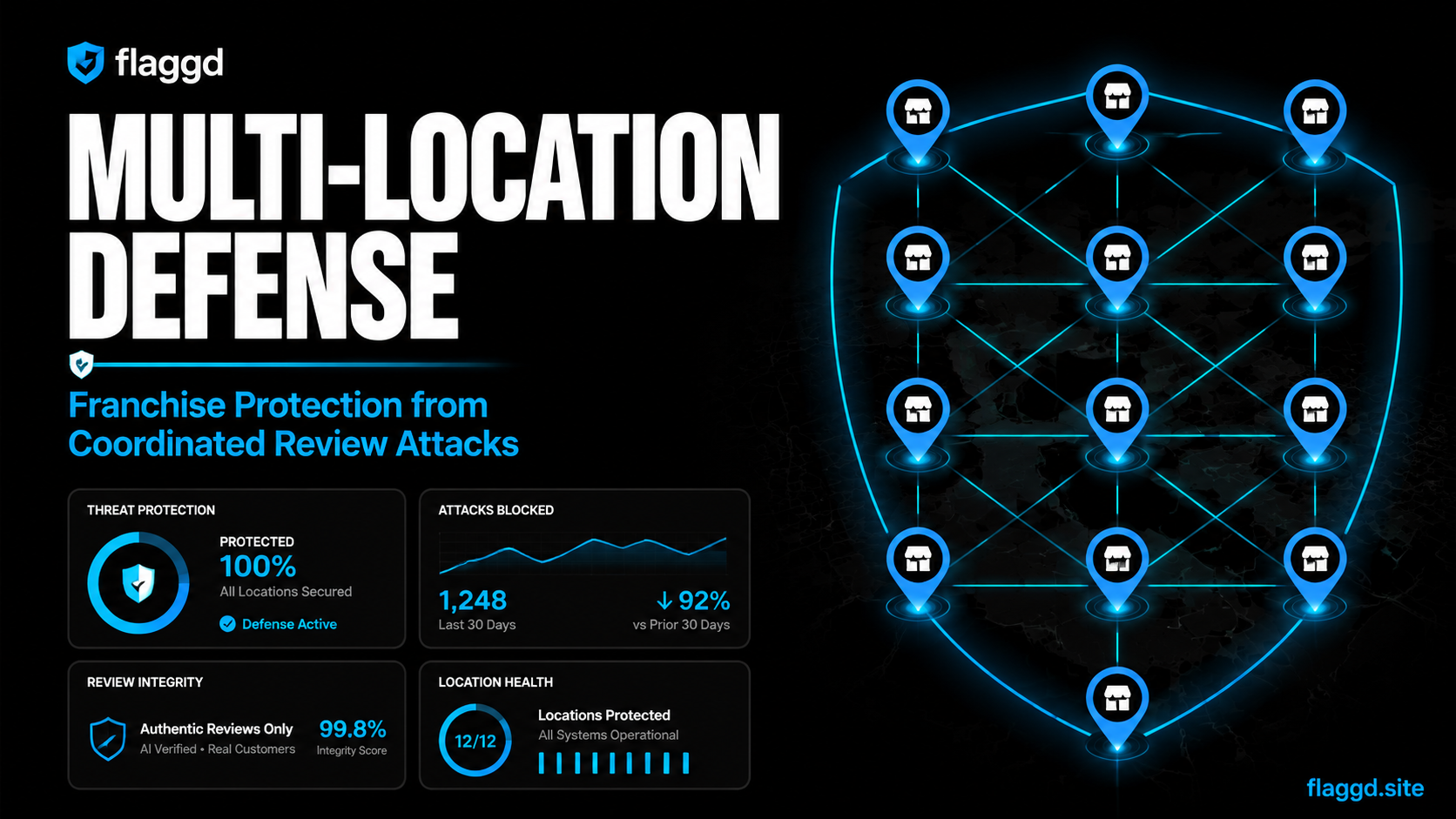
This guide is for operations directors, franchisor leadership, and multi-unit owners. It covers why chains attract coordinated attacks, how to detect cross-location signals before they become rating collapses, the architecture decisions that determine whether your defense scales, the bulk Google dispute tactics that actually move enterprise cases, the franchisee-empowerment playbook that closes the response gap, multi-state legal coordination, and the monitoring stack that gives chain operators a 24/7 early warning system. Multi-location reputation management extortion is not a hypothetical — it is a documented attack vector affecting franchise systems, dental DSOs, fitness chains, restaurant brands, and home-services networks. The brands that survive have one thing in common: they treated coordinated attacks as a centralized incident response problem from day one.
Why multi-location businesses are prime extortion targets
Chains and franchises check every box on the extortionist's target profile: high revenue dependence on local search rankings, fragmented operational authority, predictable brand naming that makes scraping trivial, and a public unit count that lets the attacker calibrate their leverage. A solo operator threatened with 50 fake reviews has one decision to make. A 300-unit chain threatened with 5,000 fake reviews across the network is a board-level emergency.
Brand-name scraping is trivial. Attackers query Google Maps and Google Business Profile listings for brand keywords, pull every unit's place ID, and build a complete location list in minutes. There is no operational defense against the listing being public — that is the entire point of local SEO. The asymmetry is built into the model.
Fragmented authority creates response delays. A franchise system has dozens or hundreds of operationally independent units. Each franchisee owns local hiring, local customer service, and often local social media — but corporate owns brand reputation. When an attack hits, the response question becomes: who decides? Who files the dispute? Who talks to law enforcement? Who answers the press? Without an explicit incident command structure, the first 48 hours are lost to internal coordination instead of external action.
Volume creates extortion leverage. The math an attacker runs is simple. A chain with 200 locations averaging 4.5 stars across 50,000 reviews is an enormous valuation lever. Pushing the average rating down 0.3 stars in 60 days could plausibly cost the chain millions in foregone bookings. Against that backdrop, a 50,000 dollar extortion demand looks like a "rounding error" the attacker assumes a finance team will pay to avoid the larger loss. The leverage exists because the brand has scale.
Press and public-disclosure risk is concentrated. A solo operator's reputation crisis stays local. A franchise crisis ends up on industry trade press, in proxy investor filings, and inside CFPB or state-AG inquiries when consumer-facing services are involved. Attackers know this. The threat in a chain extortion email is rarely just "we will post reviews" — it is usually "we will post reviews and contact your three biggest news outlets." That second clause is what makes the attack strategically distinct from a single-location threat.
Multi-unit operators have insurance budgets. Cyber liability and crime insurance policies are common at the corporate level for chains over 50 locations. Attackers know that an insured business has an internal payment pathway that can move quickly under board pressure — which paradoxically makes large insured chains more attractive than smaller uninsured operators. The defense is not to drop coverage; it is to make sure the policy explicitly excludes extortion payment and instead funds dispute, legal, and recovery costs.
Attack pattern recognition across locations
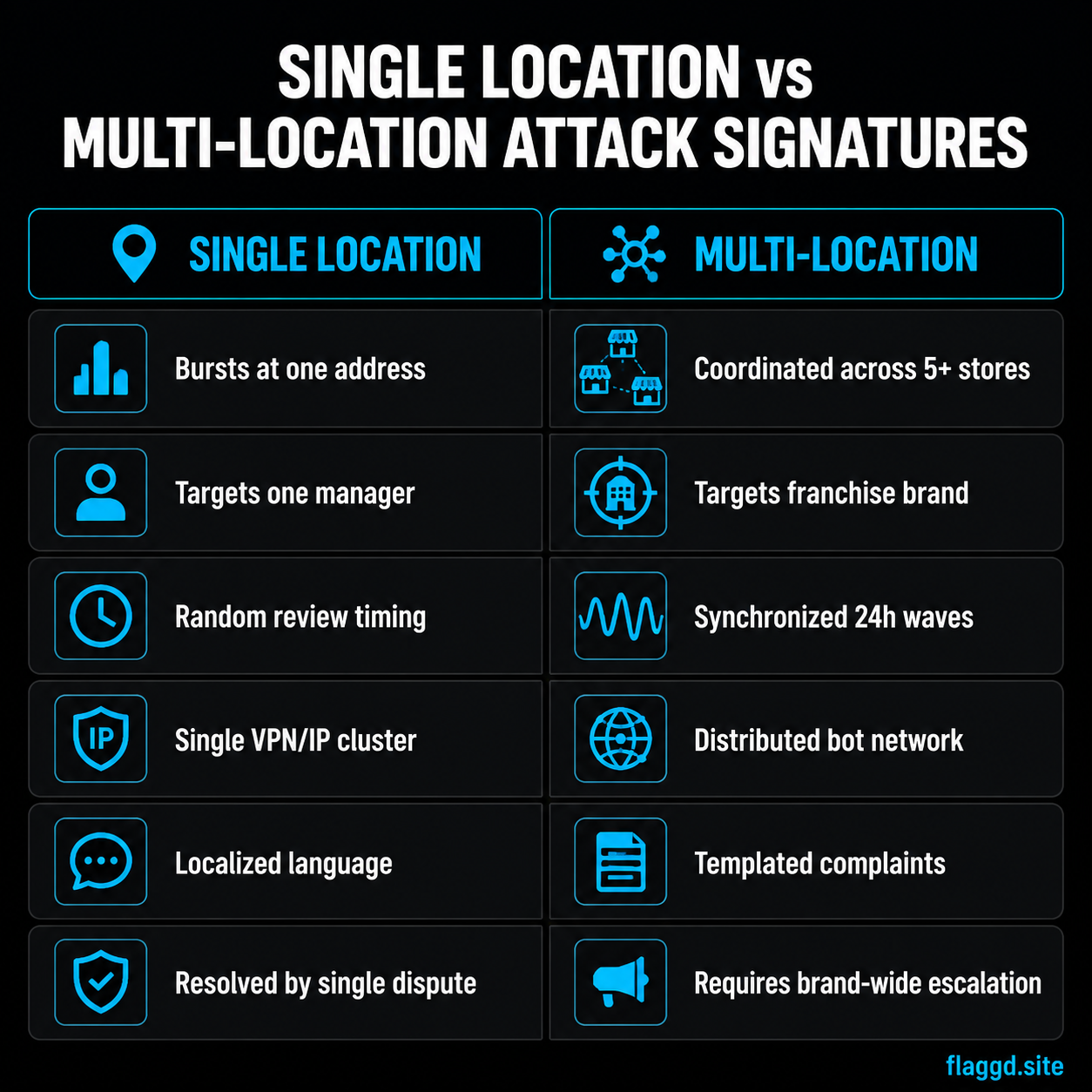
A coordinated attack against a chain looks different from a coordinated attack against a single store, and the differences are the entire basis of franchise review bombing defense. The single-unit signal set — "all these reviews appeared in 4 hours from new accounts" — still applies, but the cross-unit signal set is far stronger evidence and far harder for an attacker to hide.
Time clustering across units. A normal chain has review velocity that varies wildly by location, season, day of week, and time of day. A coordinated attack compresses that velocity into a narrow window — often 6 to 24 hours — across many units simultaneously. If 35 of your 200 stores all show a 1-star spike inside the same 18-hour window, that is not coincidence; that is a script.
Content similarity across units. Attackers reuse copy. Even when they paraphrase, the language patterns are detectable: same complaint themes, same sentence structures, same misspellings, same product or staff name templates with different locations swapped in. A simple n-gram similarity score across all new reviews from the past 72 hours surfaces this almost immediately. Single-location attackers can hide content overlap; chain attackers cannot, because the volume forces template reuse.
Reviewer-account overlap. Coordinated campaigns reuse account farms. The same dozen accounts may post against five or ten different units. A normal chain almost never sees this — real customers do not visit ten franchise locations in a week. Mapping reviewer-to-location coverage is one of the strongest cross-unit pattern signals available.
IP and device cluster signals. Google does not expose reviewer IP to business owners, but Google itself uses IP and device fingerprinting heavily during moderation. When you file a centralized dispute documenting cross-location coordination, you are giving Google the cue to look at the data they already have. The dispute package does not need to prove the IP cluster — it needs to point Google at the cluster they can see.
Geographic anomalies. Real customers review the location they actually visited. Coordinated attackers often post against locations they never visited, leaving a geographic mismatch between reviewer history and target unit. A reviewer who has historically reviewed businesses in Phoenix posting against your Boston franchise is a flag — and the chain-wide version of this signal (15 reviewers all reviewing across geographically scattered units they have no history with) is overwhelming evidence.
| Pattern | Single-Location Sign | Multi-Location Sign | Why It Matters |
|---|---|---|---|
| Time clustering | 10+ reviews in 4 hours at one store | 35 stores all spike inside the same 18-hour window | Cross-unit timing is mathematically incompatible with organic customer behavior |
| Content reuse | Identical sentences in multiple reviews at one unit | Same templates with location names swapped across the chain | Template reuse is forced by volume — attackers cannot hand-write 1,000 unique reviews |
| Reviewer overlap | New accounts with no review history | Same reviewer accounts posting at 5+ different chain units | Real customers almost never review multiple branches of the same chain in one week |
| Geographic mismatch | One reviewer reviewing far from their history | A cluster of reviewers all posting against geographically scattered units they have no history with | The attacker cannot fake authentic local check-in history at scale |
| Rating distribution | Sudden 1-star spike at one location | Identical 1-star spike pattern across many units in the same week | Synchronized rating drops across units indicate scripted posting, not customer churn |
| Complaint themes | Reviews complain about local manager or staff | Same generic brand-level complaint at units that share no staff | Real complaints reflect local operational reality; coordinated attacks reflect a script |
| Account creation | A few new accounts in one window | Hundreds of accounts created in narrow batches feeding many units | Account-farm batching is a fingerprint Google's moderation system already flags |
| Extortion email pattern | One email to a single owner | Single email to corporate referencing brand-wide leverage and unit count | Demand size scales to chain valuation, signaling sophisticated targeting |
| Press contact threat | Rare — usually just review threat | Common — attacker threatens trade press and investor disclosures | Press leverage is a hallmark of brand-level extortion targeting public-facing chains |
Centralized vs. decentralized defense architecture
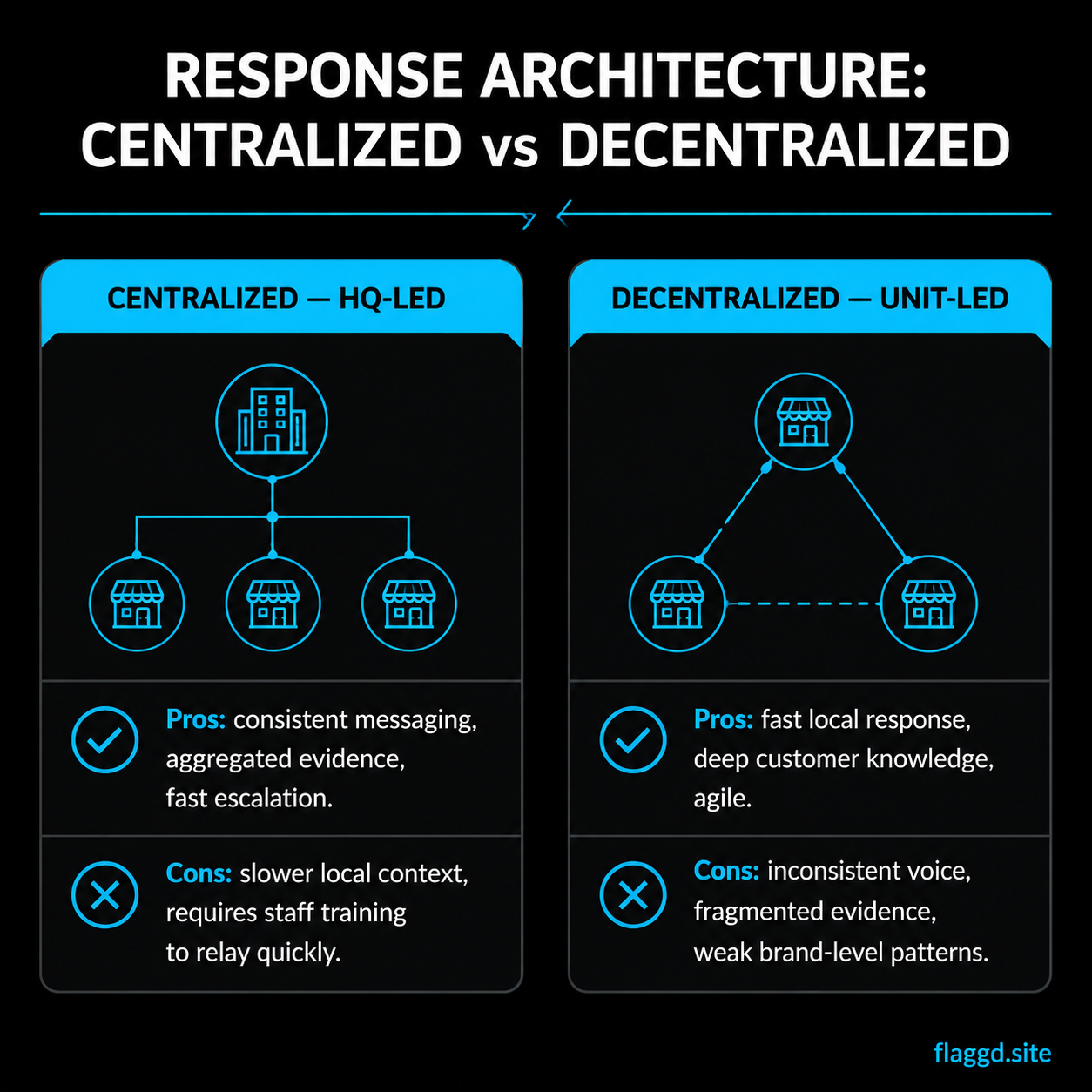
The most important multi-location review extortion defense decision is organizational, not technical: who has authority to file disputes, talk to law enforcement, contact Google, and respond publicly during an attack? Most franchise systems default to decentralized response because that mirrors how units handle everyday operations. That default kills response speed during a coordinated attack.
The centralized model. Corporate owns dispute filing, evidence custody, law enforcement reporting, Google escalation, and external communications. Franchisees own local evidence preservation, in-store customer reassurance, and immediate flagging of new threats. Authority is explicit in the franchise agreement. The chain has one voice to Google, one voice to the FBI, and one voice to the press. This model wins.
The decentralized model. Each franchisee files their own disputes, contacts their own local police, and sometimes posts their own public response. Corporate may not even know an attack is underway until rating dashboards turn red. Google receives 50 different dispute packages covering pieces of the same incident. Law enforcement sees 50 disconnected complaints. This model loses, predictably, because it never assembles the cross-unit evidence picture that makes the case compelling to either Google or the FBI.
The hybrid model. Most chains land here in practice: corporate handles the attack response, but franchisees still need to act locally because they are physically present at the unit. The hybrid is workable when authority is clearly delegated and when corporate publishes a written incident playbook every franchisee has read. It fails when authority is ambiguous, especially in chains where franchise agreements are old and predate digital reputation as a brand-protected asset.
Update the franchise agreement. If your franchise agreement does not explicitly address coordinated attacks, online reputation, and central dispute authority, you are running an undefined response. Modern multi-unit franchise agreements include reputation clauses requiring franchisees to forward suspicious communications to corporate within 24 hours, prohibiting unilateral public statements during active incidents, and granting corporate the right to file disputes on behalf of the unit. These clauses are standard in 2026 franchise documents — older agreements need to be amended.
Run table-top exercises. The architecture is theoretical until you stress-test it. Quarterly table-top exercises where corporate simulates an attack, franchisees walk through their role, and the legal and communications teams role-play their handoffs surface coordination gaps that real incidents would expose painfully. The chains that recover fastest are the ones that have practiced.
Google Business Profile bulk defense tactics
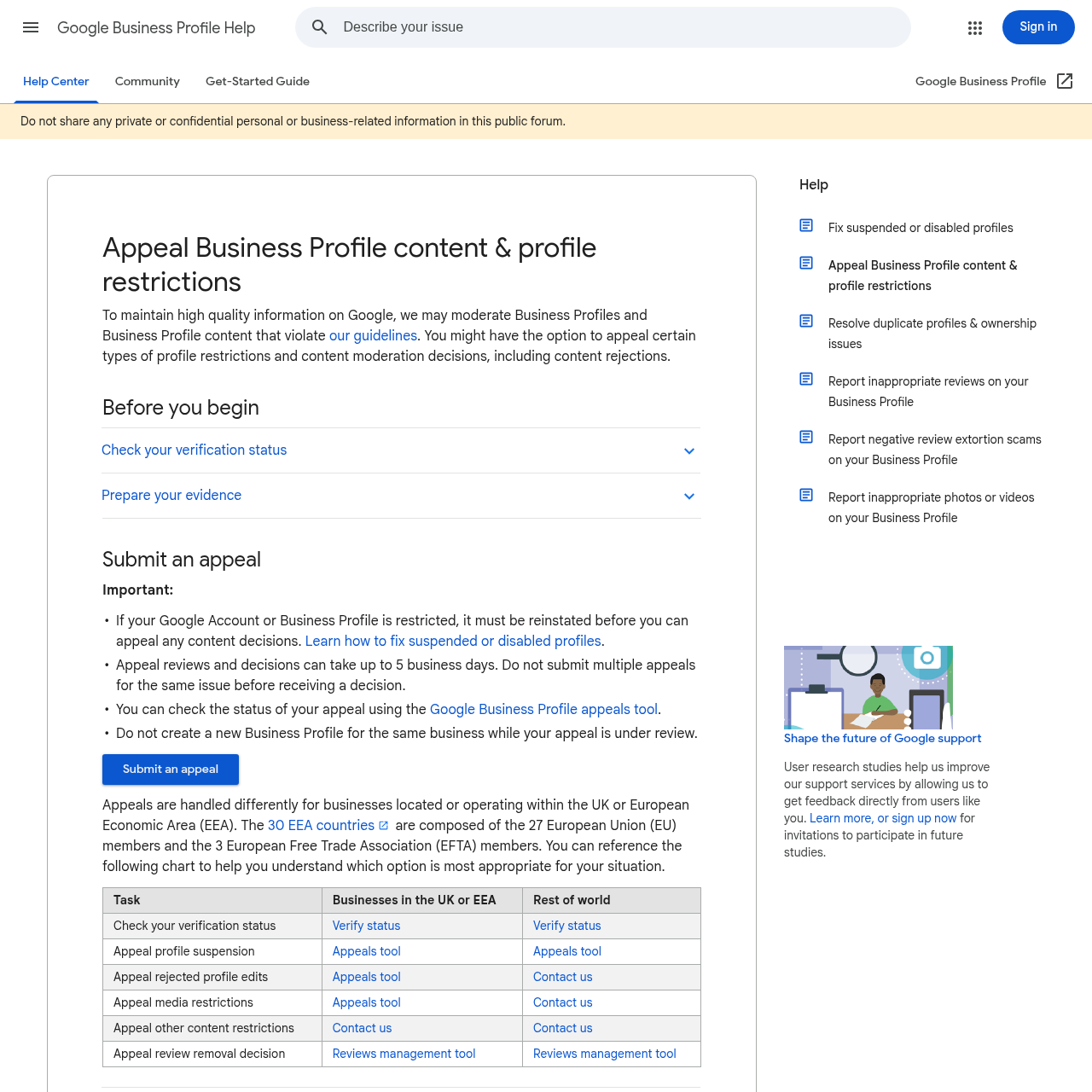
Google Business Profile has bulk-management tools that solo operators never see. Chain businesses with 10 or more verified locations can operate them through a centralized location group, with API access for chains over 100 units. These tools are the foundation of franchise review attack protection at scale.
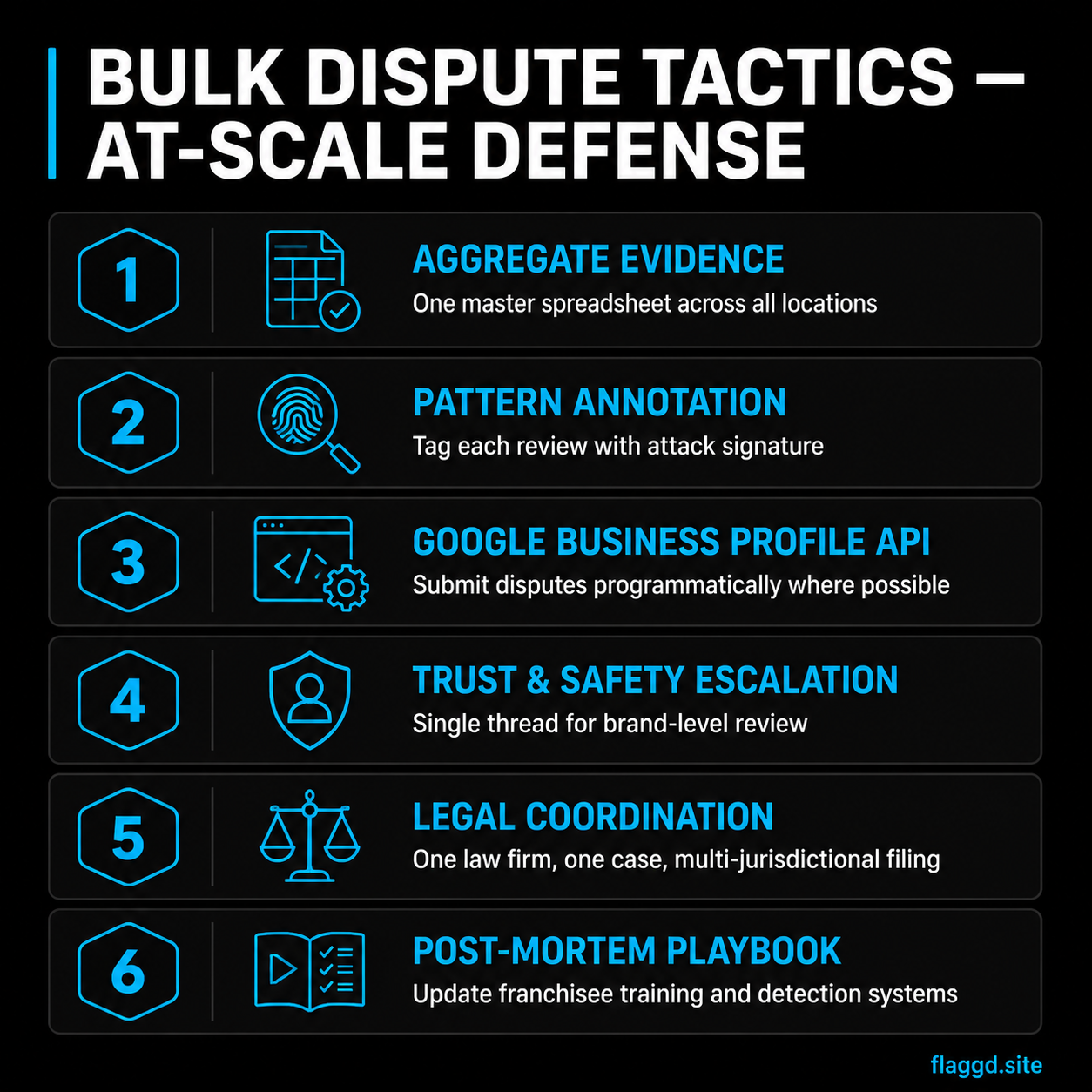
Use the Business Profile API. Google's Business Profile API exposes review feeds, location management, and reporting at the location-group level. A chain operator can pull every review across every unit into one data warehouse in near real time. Without API access, you are watching dashboards instead of building pattern-detection on top of the underlying data. With API access, you have the cross-unit evidence picture before the attack scales.
File one centralized dispute package, not 50 individual flags. Google's review-policy team weights pattern evidence. A single dispute package documenting timing clustering, content overlap, reviewer-account overlap, and geographic mismatch across all affected units lands harder than 50 disconnected "this review is fake" flags. The package should include a timeline narrative, exhibits per unit, and a summary table — written for a Google moderator who has seen thousands of legitimate disputes.
Use Google's enterprise support path. Verified chains with named account managers can escalate directly. Smaller chains can route through the Google Business Profile help community and the policy support portal. The escalation language matters: "coordinated inauthentic behavior targeting our location network" triggers different routing than "fake reviews on our listing." Use the policy language Google's own moderation framework uses.
Document the extortion threat alongside review evidence. Coordinated attacks paired with explicit extortion demands fall into a different policy category than ambient fake reviews. The dispute package should include the threat email, the demand amount, the timing relative to the review wave, and any law enforcement reference numbers. Pairing the criminal-act context with the review evidence shifts moderator priority.
Track removal status at unit-level granularity. Google does not always remove every flagged review, and partial removal is common. The chain reputation team needs a per-unit, per-review status tracker: pending, removed, denied, appealed. Without this, you cannot tell which units are still bleeding and which are recovering. The tracker drives next-step decisions about appeals, legal action, and customer communication.
Coordinate with a professional dispute service. Services like Flaggd file detailed centralized dispute packages, manage cross-unit evidence, run appeals when Google declines, and integrate with the chain's legal team. For chains over 50 units, the volume alone makes external dispute coordination economically obvious. The internal team focuses on operational recovery while the external team focuses on removal.
Franchisee training and incident response playbook
The single biggest variable in chain business review extortion outcomes is whether the unit-level manager recognizes the threat in hour one. A franchisee who flags an extortion email to corporate within 30 minutes of receipt enables a coordinated response. A franchisee who deletes the email or replies to negotiate has already lost the chain a day of evidence chain integrity.
Quarterly training is the floor. Every unit manager and every franchisee owner should attend a 30-minute training every quarter covering: what an extortion email looks like, what fake review patterns look like at the unit level, the exact incident reporting workflow, and what NOT to do (do not pay, do not negotiate, do not delete evidence, do not post unilateral public responses). The training should include the corporate hotline, the incident reporting form URL, and the after-hours escalation contact.
Publish the written incident response playbook. The playbook should fit on one page and live in every unit's break room. It should specify: hour-one actions (preserve all communications, do not respond, screenshot the threat with timestamps, contact corporate), hour-two through hour-six actions (corporate confirms receipt, evidence is uploaded to the central repository, legal team is engaged), and 24-hour actions (FBI complaint filed, Google dispute initiated, unit manager briefed on customer-facing language).
Build a one-tap reporting flow. Friction kills incident response. Every franchisee should have a dedicated email address (something like incident@brandcorp.com) and a phone number that routes directly to the reputation team. SMS-based reporting works well — a franchisee photographing an extortion email and texting it to a dedicated number is faster than logging into a portal during a panic moment.
Pre-script unit-level customer-facing language. When fake reviews appear on a unit's listing, the local manager will be asked questions by walk-in customers, by local press, and by employees. Pre-scripted language ("we have identified suspicious review activity that does not reflect our actual customers, and the corporate team is working with Google and law enforcement to address it") prevents off-message responses that complicate the legal posture.
Empower franchisees to act fast on evidence preservation. The franchisee's most valuable contribution during an attack is timely evidence capture: screenshots with timestamps, original email files preserved unchanged, POS records or appointment logs proving the reviewer was never a real customer. Franchisees should have authority to do this immediately without waiting for corporate sign-off, because the evidence window closes fast.

Legal coordination across jurisdictions
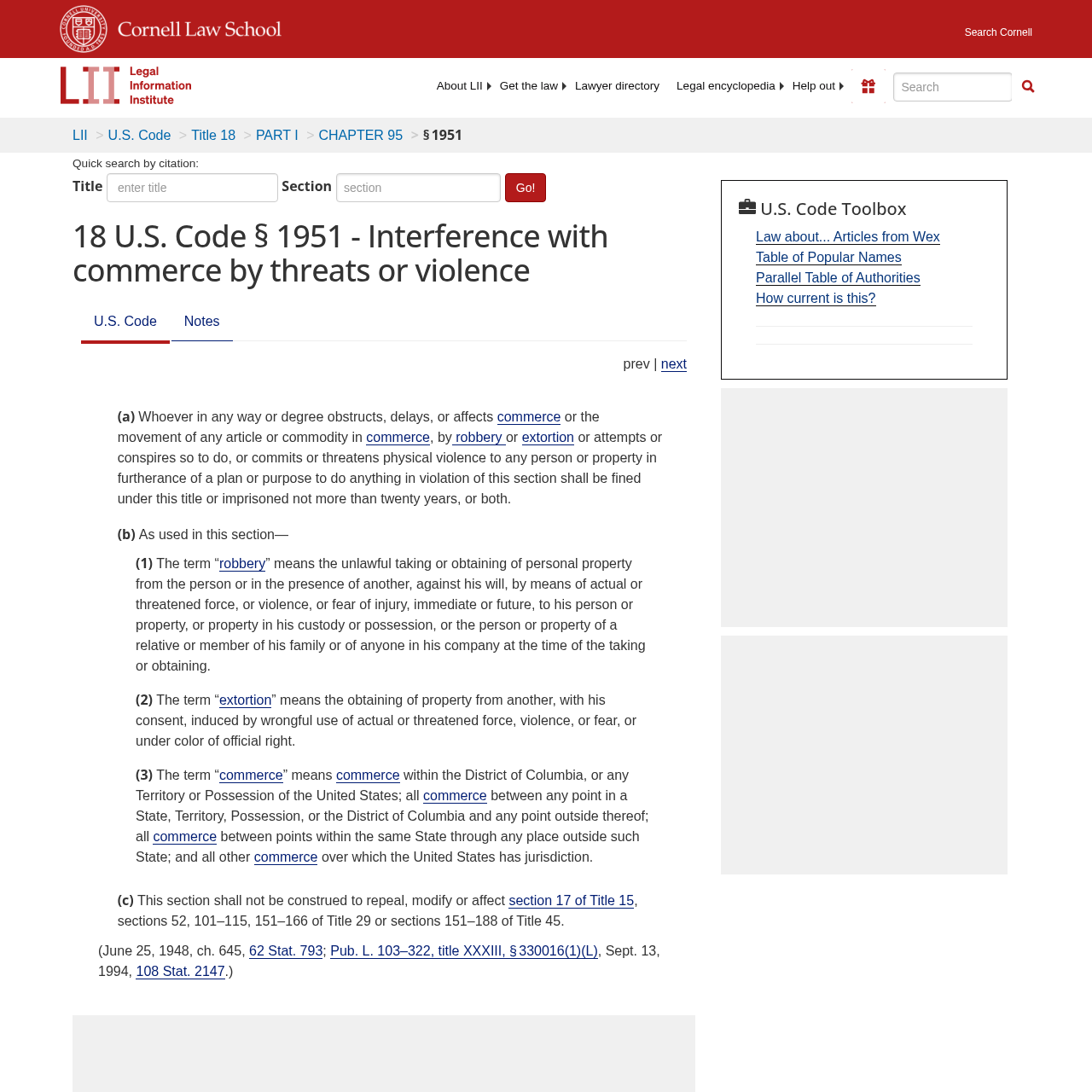
Multi-state attacks are a federal matter by design. The wire fraud and extortion statutes were built specifically for crimes that cross state boundaries, which means a single FBI complaint can encompass a coordinated attack against locations in every state simultaneously. The chain's legal team should coordinate that filing rather than having 50 franchisees file 50 different local police reports that never converge.
Federal-first legal posture. File one consolidated FBI Internet Crime Complaint Center (IC3) report at the corporate level documenting the coordinated attack across all affected units. Reference unit count, time windows, financial demand, and a summary of cross-location evidence. The IC3 report becomes the master record federal agencies use to assess severity and route to FBI field offices.
State AG coordination through NAAG. The National Association of Attorneys General has a formalized multi-state coordination process for consumer harm spanning multiple jurisdictions. A chain attorney can flag a coordinated attack to one state AG who then loops in counterparts in other affected states. This is standard practice for cross-state consumer fraud and applies cleanly to coordinated review extortion.
Local police reports still matter. Despite federal primacy, each affected unit should file a local police report documenting the local impact. These reports build the local evidentiary record, support insurance claims, and create paper trail for any state-level prosecution. The local report should reference the corporate IC3 confirmation number to tie the local incident to the federal complaint.
Civil litigation against identified attackers. When forensic work identifies the attacker (through Google subpoena response, payment trail tracing, or law enforcement disclosure), civil action becomes available: tortious interference with business relations, civil conspiracy, defamation, and Lanham Act false advertising claims for chains operating across state lines. A single civil filing can name the attacker and seek damages reflecting harm across all affected units.
Insurance claim coordination. Cyber liability and crime insurance policies typically cover legal costs, evidence forensics, and reputation recovery — but rarely cover extortion payment. The corporate risk team should engage the insurance carrier within 48 hours of incident declaration. Most policies have notice deadlines, and missing them voids coverage.
Franchise agreement enforcement. If a franchisee unilaterally pays an extortionist or makes public statements that compromise the chain's response, the franchise agreement's reputation and confidentiality clauses become enforceable. This is rare but important — the chain's legal team needs the option to enforce coordination obligations against franchisees who break ranks during an active incident.
Enterprise reputation monitoring stack
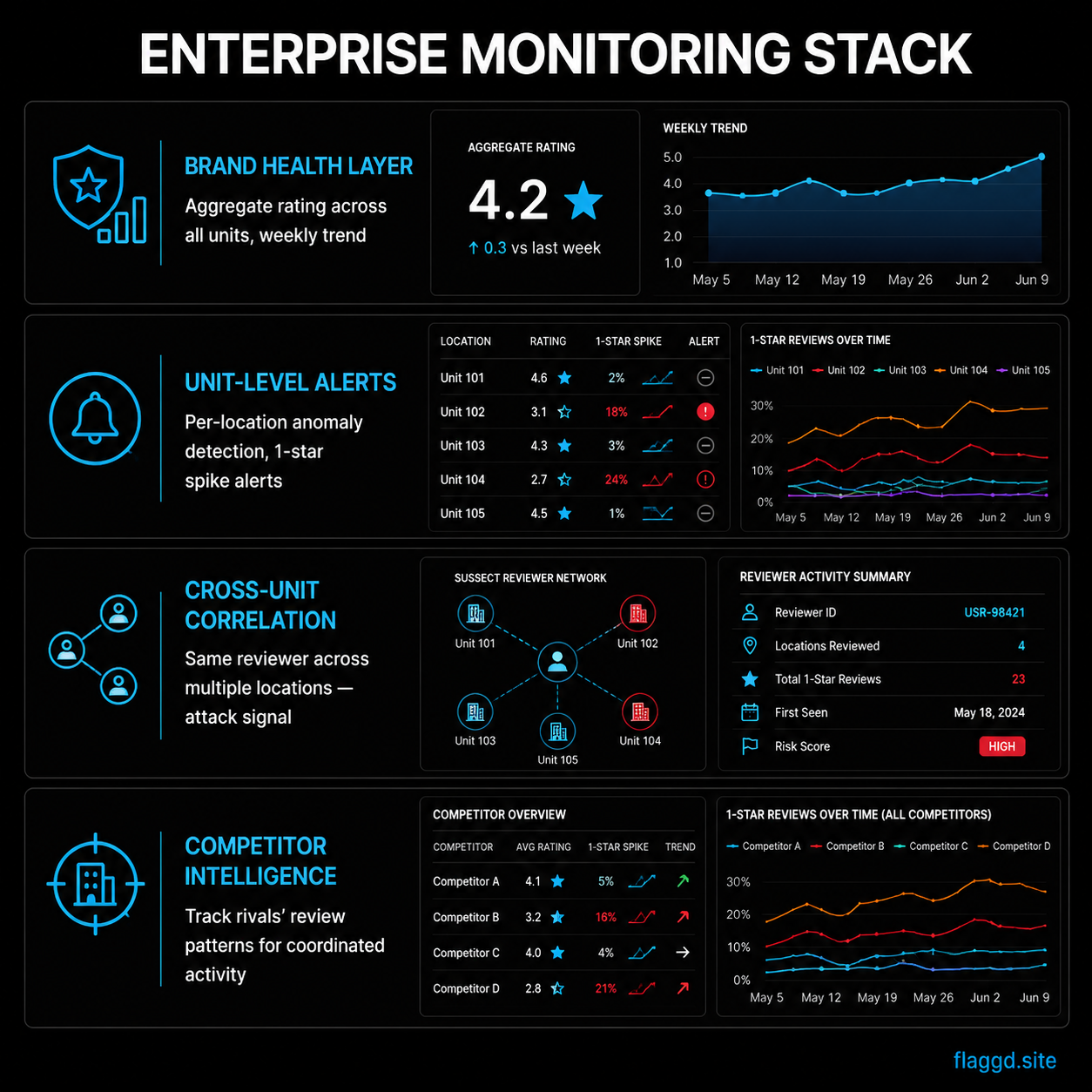
Defense begins before the attack. Multi-location reputation management extortion is a continuous monitoring problem, not a reactive cleanup problem, and the chains that catch attacks in hour two instead of week two are the ones that built the right tooling stack.
Cross-unit review velocity dashboards. Build a dashboard tracking review velocity per location with alerting when any unit exceeds two standard deviations of its 30-day baseline. Layer a chain-level alert when more than five percent of units exceed their thresholds inside the same 24-hour window — that is the strongest cross-location early warning signal available.
Sentiment-clustering monitors. Run new reviews through a sentiment and topic-clustering system that flags when multiple units suddenly show the same complaint theme. Real operational issues are local; coordinated attacks reuse themes across geographically scattered units. The clustering monitor catches attacks that velocity dashboards miss when the attacker paces posting slowly.
Reviewer-graph analysis. Track every reviewer who posts at any chain unit in a rolling reviewer graph. Real customers appear once, occasionally twice for the same unit, almost never across multiple units in narrow windows. The graph surfaces account-farm reuse instantly when the operational data is centralized.
Threat-channel monitoring. Set up dedicated inboxes and form intake for extortion threats so they cannot be deleted accidentally and so corporate sees them in real time. Monitor brand mentions on Reddit, Twitter, Telegram, and review-as-a-service forums where coordinated attacks are sometimes pre-announced or solicited. Brand mentions in those forums often precede attacks by days.
Per-unit and chain-level KPIs. Track at unit level: review velocity, average rating, 1-star rate, response rate. Track at chain level: cross-unit content similarity score, reviewer-overlap count, threat-channel mention volume, days-since-last-incident. Chain-level KPIs are the early warning signals; unit-level KPIs drive operational response.
Run monthly attack simulation. Inject synthetic anomalies into your monitoring dashboards monthly to verify alerting works, dashboards update, and the on-call reputation team responds inside the SLA. Monitoring systems atrophy if they are never tested — and the moment you discover the alert was not configured is during the actual incident.
External monitoring partnerships. Services like Flaggd, ReviewTrackers, and Birdeye offer managed monitoring that integrates with the chain's data warehouse. For chains over 100 units, the volume of signals to triage often exceeds internal team capacity, and external monitoring partners absorb the noise while alerting only on high-confidence anomalies.
Frequently asked questions
Multi-location review extortion defense is ultimately a scale advantage problem in disguise. The attacker is betting that a chain's fragmented operational structure makes the brand slower than a solo operator. When that bet is right, the chain takes weeks to recover and pays an outsized reputation cost. When the bet is wrong — when corporate has centralized evidence, run franchisee training, built monitoring tooling, and prepared a tested incident playbook — the chain's scale becomes the weapon. Hundreds of units feeding pattern data into one detection system, one consolidated dispute package, one federal complaint, and one pre-scripted response posture removes faster, recovers faster, and sends a message that this brand is not a viable target. Franchise review bombing defense at chain scale is not optional infrastructure in 2026; it is core operational risk management. The brands that treat it that way keep their ratings, their bookings, and their valuation. The brands that treat it as a series of unit-level problems pay the difference.