Key Takeaways
- The broker split decides most mover filings. A review attacking the estimate, the deposit or the promised window describes the broker's acts, not yours, and comes down. The same review attacking the crew or the damage stays up.
- A name search is not a no record search. Shipments are booked by spouses, adult children and relocation coordinators. Search origin address, destination address, booking number and date window before you call a review fake.
- The hostage load review is federal, not Google. Under 49 CFR 375 you must relinquish the shipment at 110 percent of a non-binding estimate. Google will not adjudicate that, and it will not remove the review either.
- Movers hold better evidence than any other trade and file it least. The bill of lading, the inventory sheet, the weight ticket and the booking agreement are dated, signed and exportable. The in-profile flag has nowhere to attach them, which is why the escalation matters.
- Settling a damage claim for a deletion is a rule violation. The FTC's review rule reaches suppression, with civil penalties up to $53,088 per violation. Pay the claim because it is owed and say nothing about the review.
- Why a mover's one stars land harder
- The broker problem: the review that belongs to someone else
- Which moving reviews Google actually removes
- What Google will not remove, however unfair it feels
- The hostage load review and the 110 percent rule
- The five documents only a mover has
- Filing and escalating: the routes and the clock
- Two replies that turn a review into a legal problem
- Between moves: making the next dispute a 20 minute job
The one star arrives four days after a delivery, from a name that is not on the bill of lading, complaining about a deposit your company never took and a delivery date your company never quoted. Moving company Google review removal turns on that gap, because in this trade the person who sold the job is frequently not the person who moved the goods, and the review lands on whichever listing the customer can find. The stakes are unusually literal: BrightLocal's 2026 Local Consumer Review Survey of 1,002 US consumers found that 68% will only use a business with four or more stars and 31% will not go below 4.5, up from 17% the year before, while 32% look specifically for reviews written in the last two weeks. A bad fortnight is a bad quarter of booked jobs. We file these disputes every week, and what separates a removal from a denial is never how unfair the review is. It is whether the filing names a Google policy category and attaches documents only a household goods carrier holds.

Why a mover's one stars land harder
Most local businesses sell a service the customer can walk away from. You take custody of everything they own, on the most stressful week of their year, and hand it back days later in a different state.
Three structural facts make the reviews sharper than they are for a dentist or a restaurant. The first is that the price genuinely cannot be fixed at the sales call: a non-binding estimate moves with actual weight, and a customer who expected the quote to be the invoice reads the difference as a bait and switch even when the paperwork was correct and signed.
The second is that the industry is a layered supply chain. Brokers sell, carriers haul, origin and destination agents load and unload, and a customer who dealt with four companies remembers one name. The third is that the loss is emotional rather than transactional. A scratched heirloom is not a service failure that can be refunded, and reviews about it read accordingly.
None of that changes what Google will act on. It changes how many reviews you receive that describe someone else's conduct, which is the opportunity most movers never take. Our contractors and home services guide covers the ground the trades share; this one is about bills of lading, brokers and custody.
The broker problem: the review that belongs to someone else
This is the single most under-filed removal in the moving industry, and it exists because federal law draws a line the customer never sees. Under 49 CFR 371 subpart B, a household goods broker must display its status as a broker and state that it will not transport the shipment but will arrange for an FMCSA-authorised carrier to do so, and must give every potential shipper a list of the carriers it uses with their DOT and MC numbers.
In practice the customer books with a name and a website, a truck arrives with a different name on the door, and every grievance about the sales process gets posted to whichever Business Profile they can find. Usually that is yours, because you are the company they met.
The filing turns on splitting the review, not the job. Work out, sentence by sentence, whose conduct is being described.
| What the review complains about | Whose act it was | Describes your business? | Removable? |
|---|---|---|---|
| Sight unseen quote, deposit taken, pressure calls | Broker sales floor | No | Yes, with the booking agreement showing the broker's MC number |
| Promised a delivery date you never agreed to | Broker, unless it is in your bill of lading | Partly | Sometimes, if the spread is shown against your signed delivery terms |
| Crew conduct, packing, breakages, late arrival on the day | You, the carrier | Yes | No. This is reply work, not dispute work |
| A move in a state your authority does not cover | A same-name carrier elsewhere | No | Yes, with your operating authority and both listings shown |
| Destination agent unloaded badly | Your agent, on your bill of lading | Yes | No. The contract was with you |
Two of those five rows are genuine experiences of your business and will never come down. Filing them as fake burns the credibility you need on rows one and four, which is the same trap we describe in off-topic reviews and what qualifies.
Which moving reviews Google actually removes
Google publishes what it enforces, and the list is narrower than most owners assume. The prohibited and restricted content policy for Maps names each category: Fake Engagement, Rating Manipulation, Impersonation, Misrepresentation, Harassment, Personal Information, Off-Topic, Advertising and Solicitation, and more besides. Your filing has to land inside one of them by name. Nothing comes down for being harsh, and nothing comes down because you disagree with it.
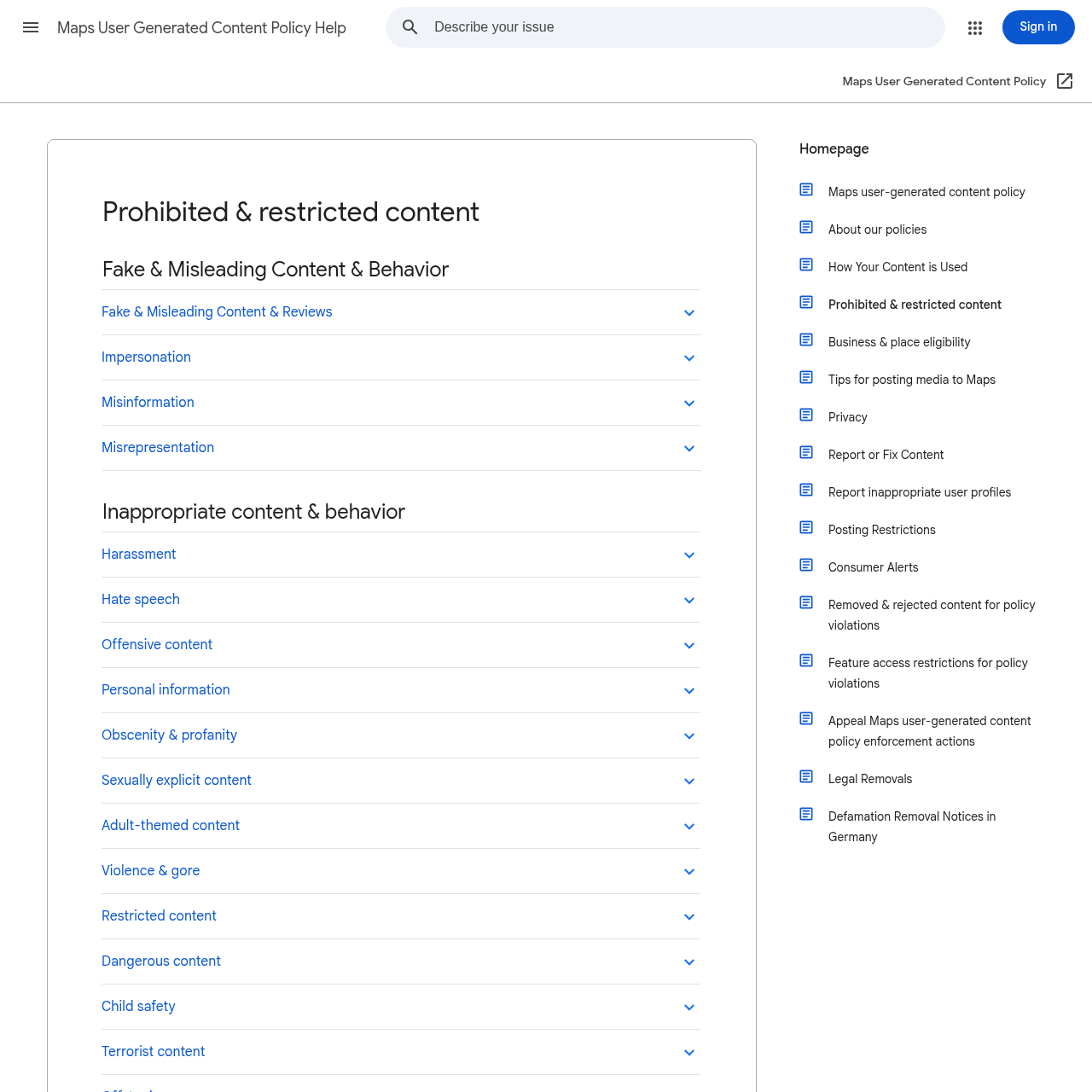
Here is the translation we use when a moving company sends us a review, from what happened on the job to what Google is prepared to act on.
| What landed on your listing | Policy category to cite | What the filing must attach |
|---|---|---|
| No record of the shipper, either address, the phone or the date | Fake Engagement | Dated export of the four field search across dispatch, invoicing and the card processor |
| Complaint about a broker's quote, deposit or sales calls | Fake and Misleading Content | Booking agreement naming the broker and its MC number, plus your own bill of lading |
| A cluster of one stars in days, from new accounts | Rating Manipulation | All of them as one case, with timestamps, account ages and any shared reviewing pattern |
| A refund demand with a review attached to it | Fake Engagement, quoting the demand | The message itself with sender details and timestamp visible |
| A review naming a driver's home town, vehicle or phone number | Personal Information | A screenshot quoting the exact line, nothing more |
| A rival's owner or a former driver posting as a customer | Conflict of Interest | The link between the account and the competitor or the employment record |
If you want the categories in full rather than the mover's subset, every violation type explained walks through all of them.
What Google will not remove, however unfair it feels
Knowing this early saves a fortnight. A review that describes a real interaction with your company is a genuine experience under the policy, and Google does not weigh whether the customer was right.
- The weight surprise. A non-binding estimate rose at the scale, the invoice moved, and the customer calls it a scam. Real shipment, real invoice, real anger. It stays.
- The damage claim in progress. Every claim under your released rates liability produces a review while it is open. It describes your service, so it stays, and answering it badly makes the claim worse.
- The delivery spread. Long distance loads consolidate and the spread is in the paperwork nobody read. Genuine experience, and not removable however clearly it was disclosed.
- The crew personality review. Two stars because a packer was blunt. Harsh, unhelpful, and squarely inside what Google protects.
The productive answer to all four is one short public reply and a faster claims process. Our reply templates for negative reviews hold the line without publishing a customer's address, which for a mover is the easiest privacy mistake to make.
The hostage load review and the 110 percent rule
No accusation in this trade travels further than "they held my stuff hostage", and no accusation is worse handled. The Department of Transportation's Office of Inspector General defines the practice precisely, as deliberately providing a low-ball estimate to win the job and then withholding the goods unless the customer pays significantly more. It is a fraud investigation category, not a review category.
What settles the question is federal and specific. Under 49 CFR 375 subpart D, a carrier must relinquish possession of the shipment when the shipper offers no more than 110 percent of a non-binding estimate at delivery, with limited additions for services requested after the bill of lading issued and for impracticable operations capped at 15 percent of other charges. On a binding estimate, failing to release on payment of the binding amount is a failure to transport with reasonable dispatch and exposes you to cargo delay claims.
- Google will not remove it. The customer interacted with you, so the review describes a genuine experience whatever the merits.
- Your reply is discoverable. A public argument about what was owed reads very differently in a regulator's file six weeks later.
- The paperwork is the answer. The signed estimate, the weight ticket and the delivery receipt settle it in a forum that can act. Keep them together from day one.
One line, no numbers, no names: you released on the terms the paperwork set, and you are happy to walk them through it by phone. Then stop.
The five documents only a mover has
This is where movers have an advantage over every other local trade and almost never use it. A restaurant disputing a fake review has a card receipt. You have a signed, dated, itemised custody chain.
| Document | What it proves in a dispute | Where it lives |
|---|---|---|
| Bill of lading | Who the shipper was, the agreed terms, the signatures and the dates | Operations software, exportable as PDF |
| Signed written estimate | Binding or non-binding, and what was disclosed before loading | Sales file, attached to the bill of lading |
| Inventory sheet with condition codes | The condition of each item at origin, initialled by the shipper | Crew tablet or the paper set scanned at close |
| Certified weight tickets | That the invoice followed the scale, not the sales pitch | Scale house receipts, filed by job number |
| Broker booking agreement | Who sold the job, under which MC number, on what terms | Dispatch inbox, the single most under-attached document in this trade |
Redact the customer's personal details before anything is attached, and keep the pack to what proves the one point you are making. Documenting evidence for a review dispute covers the format that reviewers of these cases actually read.
Filing and escalating: the routes and the clock
There are two doors and you should use both, in order, on the same day. The in-profile flag is fast and blind: it takes the review ID and nothing else, which for a mover means the broker agreement, the bill of lading and the weight ticket never reach a human. The Business Profile support escalation is slower and can be shown the file.
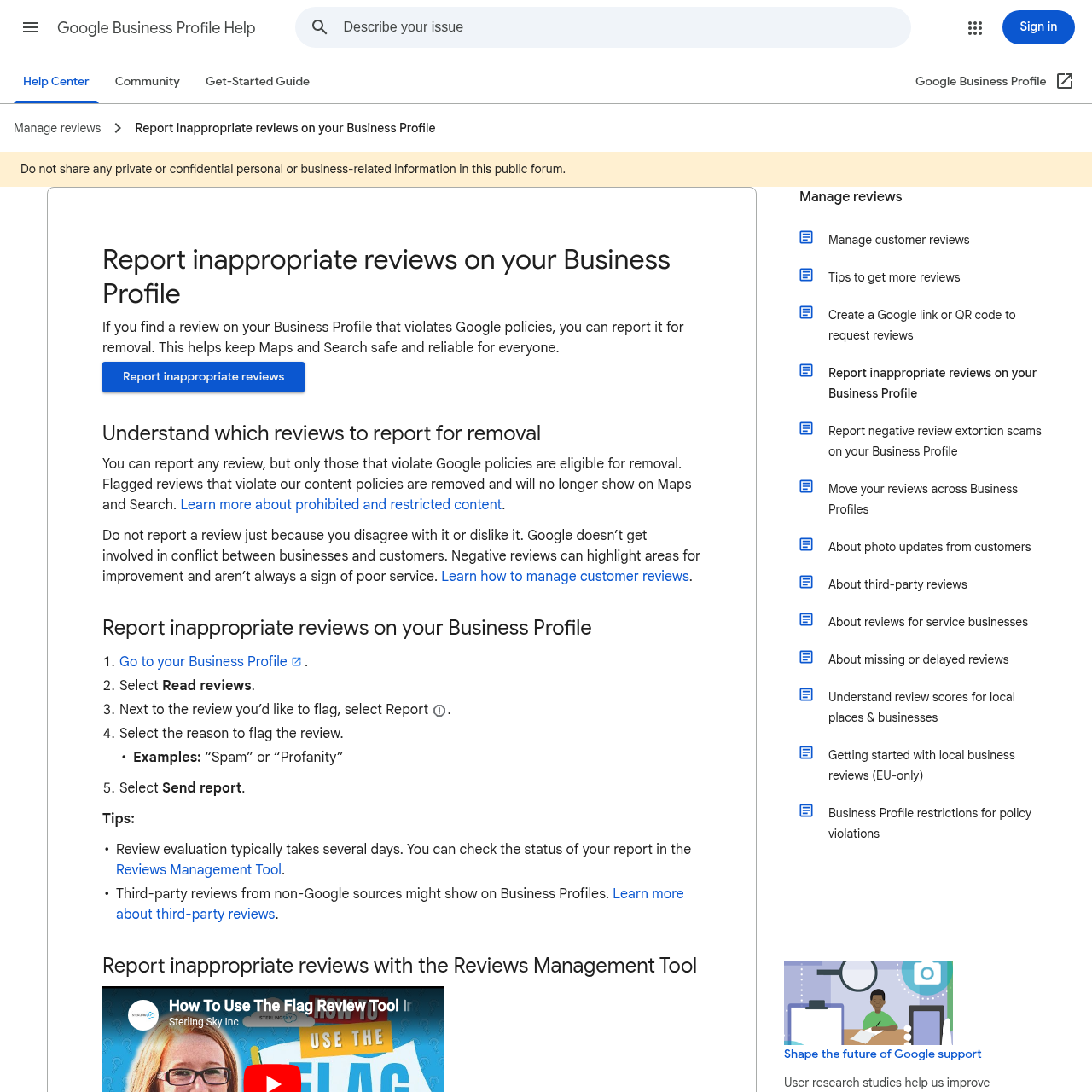
Write the escalation the way a claims adjuster reads a file. First sentence: the policy category by name. Second: the one fact that proves it. Third: the attachments, listed. Nothing about how long you have been in business and nothing about what the review has cost you. "This review breaches Fake and Misleading Content. The reviewer booked with a licensed household goods broker, MC 123456, whose written agreement is attached; our bill of lading shows the shipper as a different named party and no contact between our office and this reviewer. Attached: booking agreement, bill of lading, dispatch search on both addresses and the booking phone." That beats two paragraphs of frustration every time.
On timing, plan in weeks rather than days and do not refile in between, which resets you in the queue. How long Google takes to remove a review sets realistic expectations, and what to do when a request is denied covers the second pass, which is where evidenced mover cases tend to win.
Two replies that turn a review into a legal problem
The first is the trade. In this industry the damage claim and the one star arrive in the same week, so "we will settle the claim if the review comes down" feels like a negotiation and reads like suppression. The FTC's Rule on the Use of Consumer Reviews and Testimonials took effect on 21 October 2024 and reaches conduct used to prevent or remove a negative review. In December 2025 the Commission sent warning letters to ten companies over the same rule, noting that civil penalties at up to $53,088 per violation add up quickly. Settle the claim on its merits, say so, and say nothing about the review.
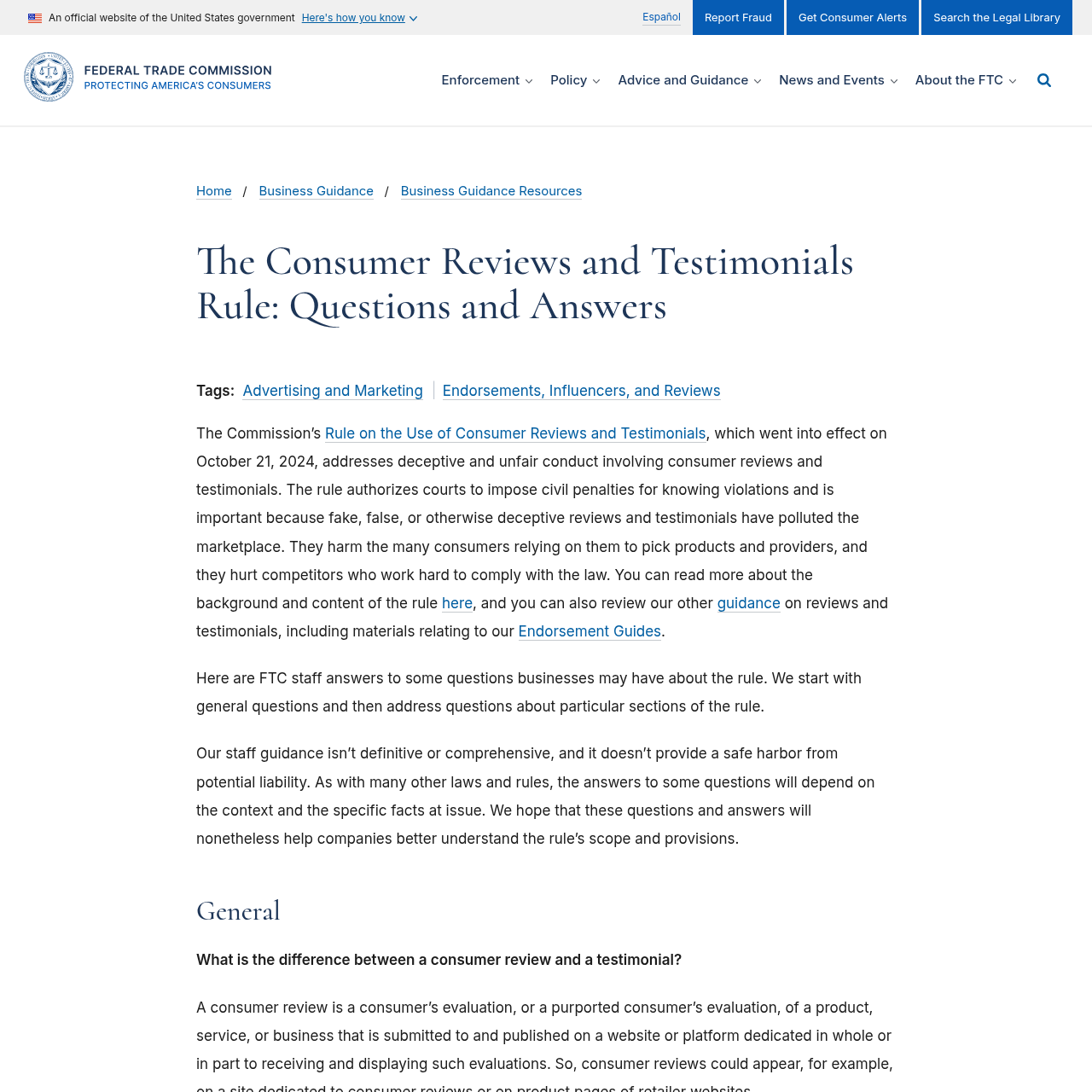
The second is the correction, and movers make it worse than anyone because the facts are addresses. The instinct to reply "you moved from 14 Oakfield Road to an apartment in Tempe on the 8th and your daughter signed for delivery" is understandable, and it publishes a customer's old address, new address, move date and household composition to the open internet. Keep the public reply to one paragraph naming no address, no date and no third party, then take the detail to a phone call. The FTC fake review rule in 2026 covers the compliance side in more depth.
Between moves: making the next dispute a 20 minute job
Everything above is faster when the groundwork is done, and the groundwork is dull enough that most companies skip it until the second attack.
- Alerting, so you learn in hours not weeks. With 32% of consumers reading only the last fortnight of reviews, a late discovery is the expensive kind.
- A saved four field search. Origin address, destination address, booking phone, date window. Saved as a template so any dispatcher can run it without you.
- A broker file per job. Booking agreement filed against the job number on the day it lands, not hunted for six weeks later.
- Review velocity from completed deliveries. Asked at the destination walkthrough, before the claim window opens, not a week later by email.
Velocity does the double duty, because it is the only defence that also works on the reviews Google was never going to remove. Set up review monitoring and alerts first, then build the request into the delivery walkthrough.
Frequently asked questions
A broker sold the job and the customer reviewed us. Is that removable?
We have no record of the reviewer's name. Is that enough?
The review says we held their goods hostage. Can Google take it down?
Someone reviewed us for a move in a state we do not operate in. What do I file?
Can I offer to pay a damage claim if the customer deletes the review?
Six one star reviews landed the week after we won a bid. What now?
Google denied our flag. Is that the end of it?
Moving company Google review removal is a sorting exercise before it is a filing exercise. In your head the review is the customer a broker oversold, or the one whose non-binding estimate moved at the scale, or the claim that is still open. To Google it has to be a breach of a named content policy, evidenced by documents your operations software can export in minutes. Split the review by whose conduct it describes, run the four field search before you file, run the flag and the escalation together on the same day, and accept early that weight surprises and open claims are reply work. If you would rather hand the filing to a team that does this every week, that is what we are here for.